The KPEX Ecosystem: From First-Generation Estimating to a Connected Cost Intelligence Network
The capital project industry is shifting from spreadsheets to integrated platforms and fully connected KPEX ecosystems. This transformation is redefining how cost estimates are produced, improving accuracy, accelerating decisions and enabling data-driven competitive advantage, while exposing the limits of fragmented, traditional approaches.
Introduction: The Structural Shift in Capital Cost Engineering
The capital project industry is undergoing a fundamental transformation. For decades, cost estimation has operated in silos — fragmented data, disconnected tools, and methodologies heavily dependent on individual expertise rather than structured intelligence.
The emergence of the KPEX ecosystem marks a shift from isolated estimation practices to an integrated, data-driven, multi-actor network, where cost, procurement, and market intelligence converge into a single operational framework.
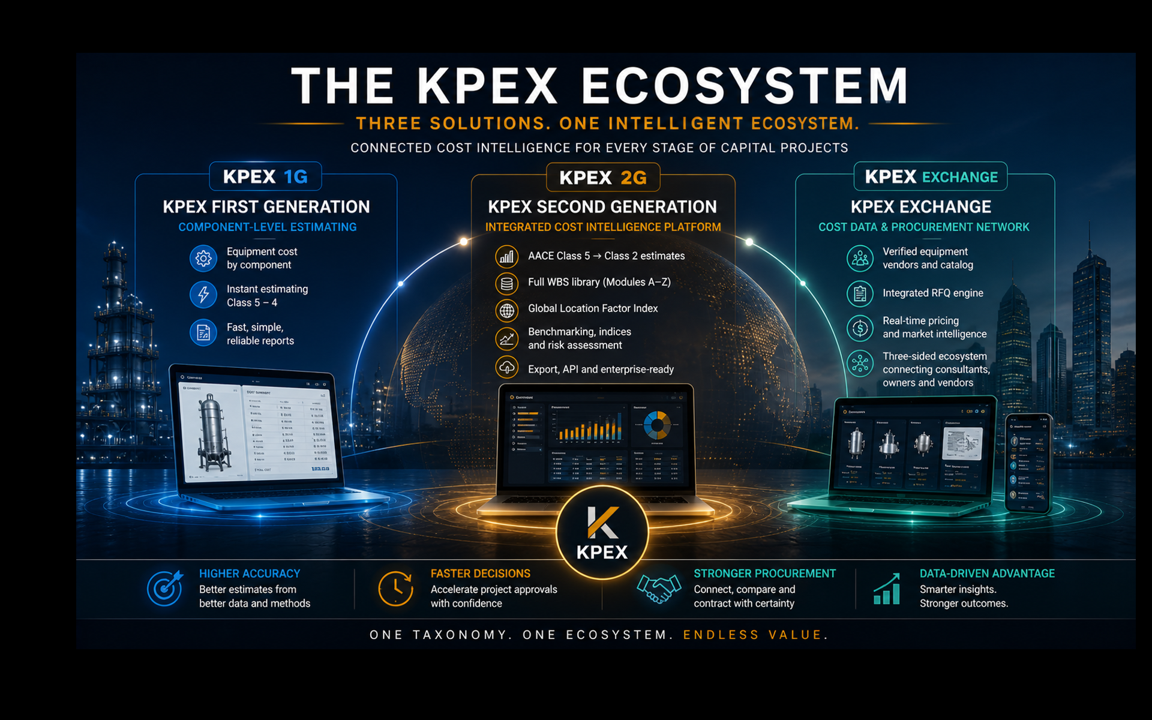
This evolution can be clearly understood through three stages:
- First Generation (1G) — Component-based estimating
- Second Generation (2G) — Integrated cost intelligence platforms
- Kpex Exchange — Networked cost data and procurement ecosystem
Together, these form a unified architecture that redefines how capital costs are generated, validated, and executed.
1. First Generation (KPEX 1G): Component-Based Estimation
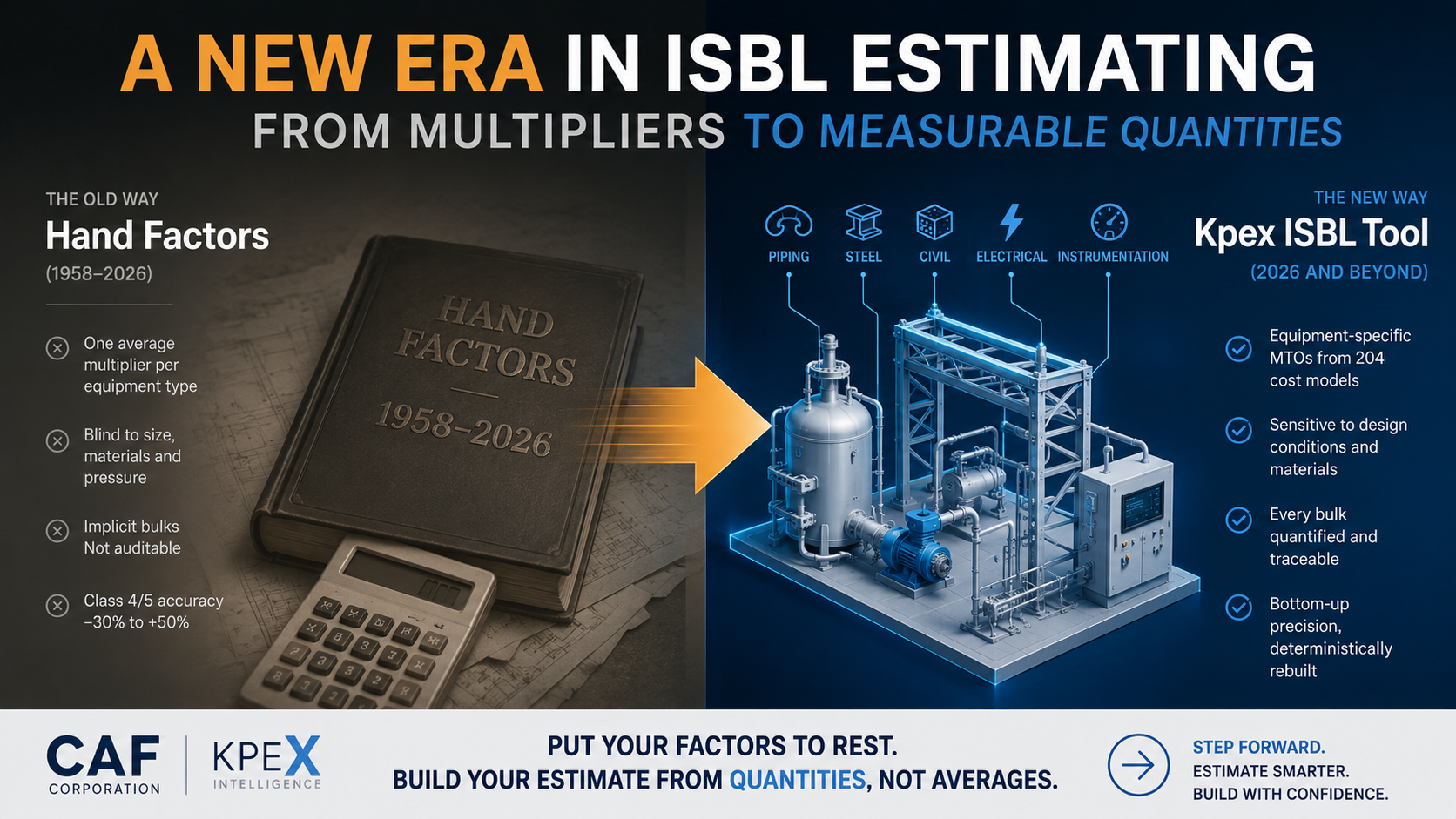
The first generation of modern cost engineering platforms introduced structured, equipment-level cost intelligence.
This represents a major advancement over traditional spreadsheets.
Core Characteristics
- Equipment-based cost models (bottom-up logic)
- Indexed cost normalization (CAFCI / internal indices)
- Standardized component libraries (e.g., Module A)
- Rapid estimate generation (Class 5–4 range)
- Deterministic outputs with limited system integration
Value Delivered
- Speed in early-stage estimation
- Improved consistency vs legacy Excel models
- Reduction of purely analog-based estimates
However, 1G systems remain isolated tools:
- No live link to vendors
- No procurement integration
- No continuous data feedback loop
They solve calculation, but not connection.
2. Second Generation (KPEX 2G): Integrated Cost Intelligence Platforms
The second generation introduces full lifecycle cost intelligence, aligning with AACE frameworks (Class 5 → Class 2).
This is where platforms like Kpex 2G operate.
Core Capabilities
- Full estimate development across AACE classes
- Integrated WBS taxonomy (Modules A–Z)
- Location Factor Index (global normalization)
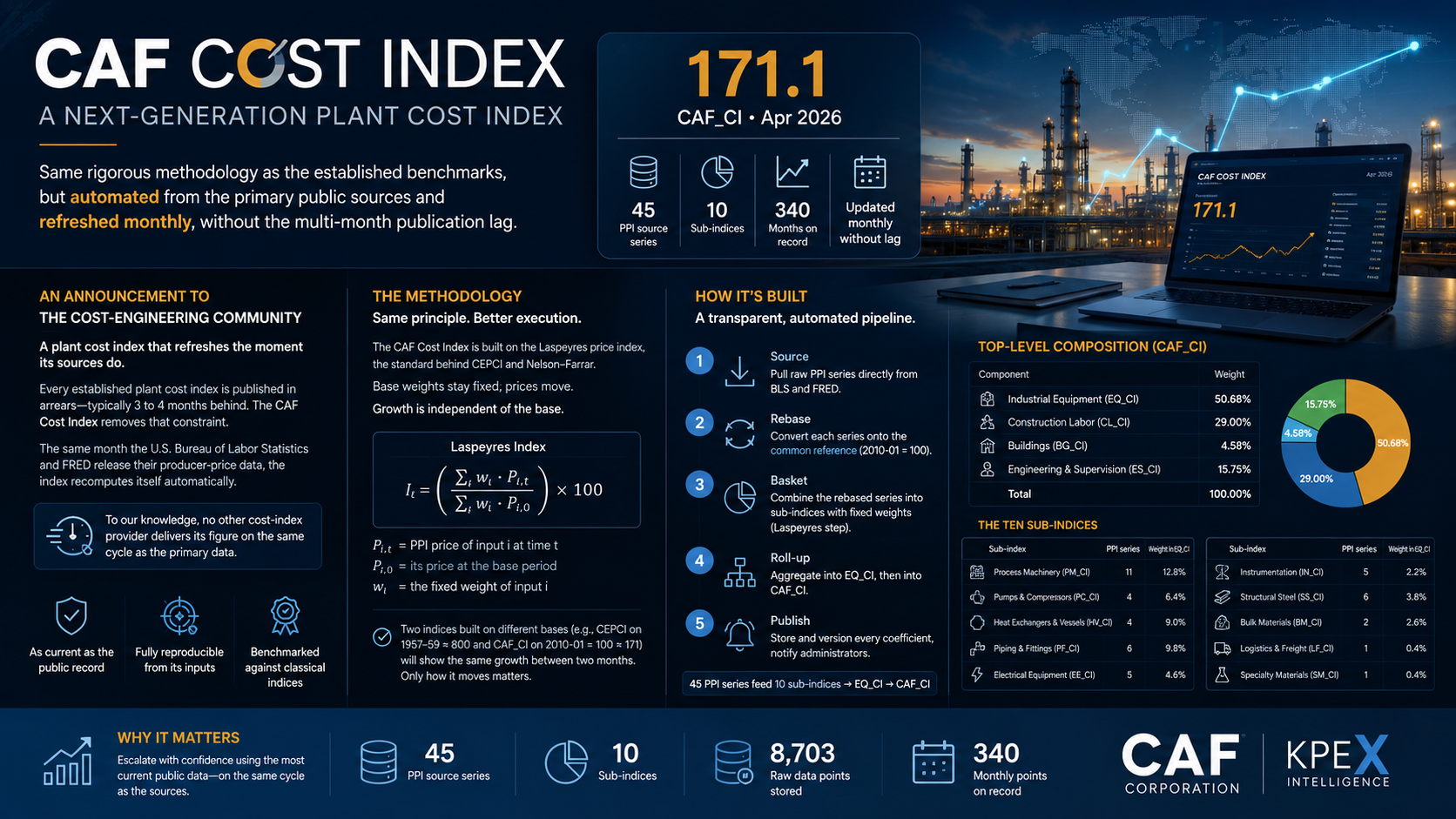
- Cost Adjustment Index (time-based escalation)
- PDRI / CRI maturity-driven accuracy control
- Benchmarking embedded into workflow
- Exportable, auditable Basis of Estimate
Key Shift
From:
“Calculating cost”
To:
“Engineering cost intelligence”
Value Delivered
- Defensible estimates aligned with lenders and investors
- Structured benchmarking across project phases
- Improved decision confidence at FID
- Standardization across organizations
Yet, even 2G platforms still operate primarily within the estimation domain.
3. KPEX Exchange: The Emergence of a Connected Cost Data Network
The third stage — KPEX Exchange — transforms cost engineering into a network-driven ecosystem.
Core Concept
A three-sided platform connecting:
- Cost Engineers / Consultants
- Project Owners / PMOs
- Equipment Vendors
All operating through a shared WBS taxonomy aligned with AACE standards.
Core Capabilities of KPEX Exchange
- Vendor catalog integrated at equipment level
- RFQ engine directly linked to cost models
- Live pricing feedback into estimates
- Bid normalization and comparison tools
- Data contribution and monetization (data economy)
- Continuous benchmarking from real transactions
4. The Real Breakthrough: Closing the Loop
Historically, cost engineering has been linear:
Estimate → Approve → Procure → Execute → Close
With KPEX Exchange, the model becomes circular and self-learning:
Estimate → RFQ → Vendor pricing → Benchmark → Update models → Improve accuracy
This creates a data feedback loop that continuously improves:
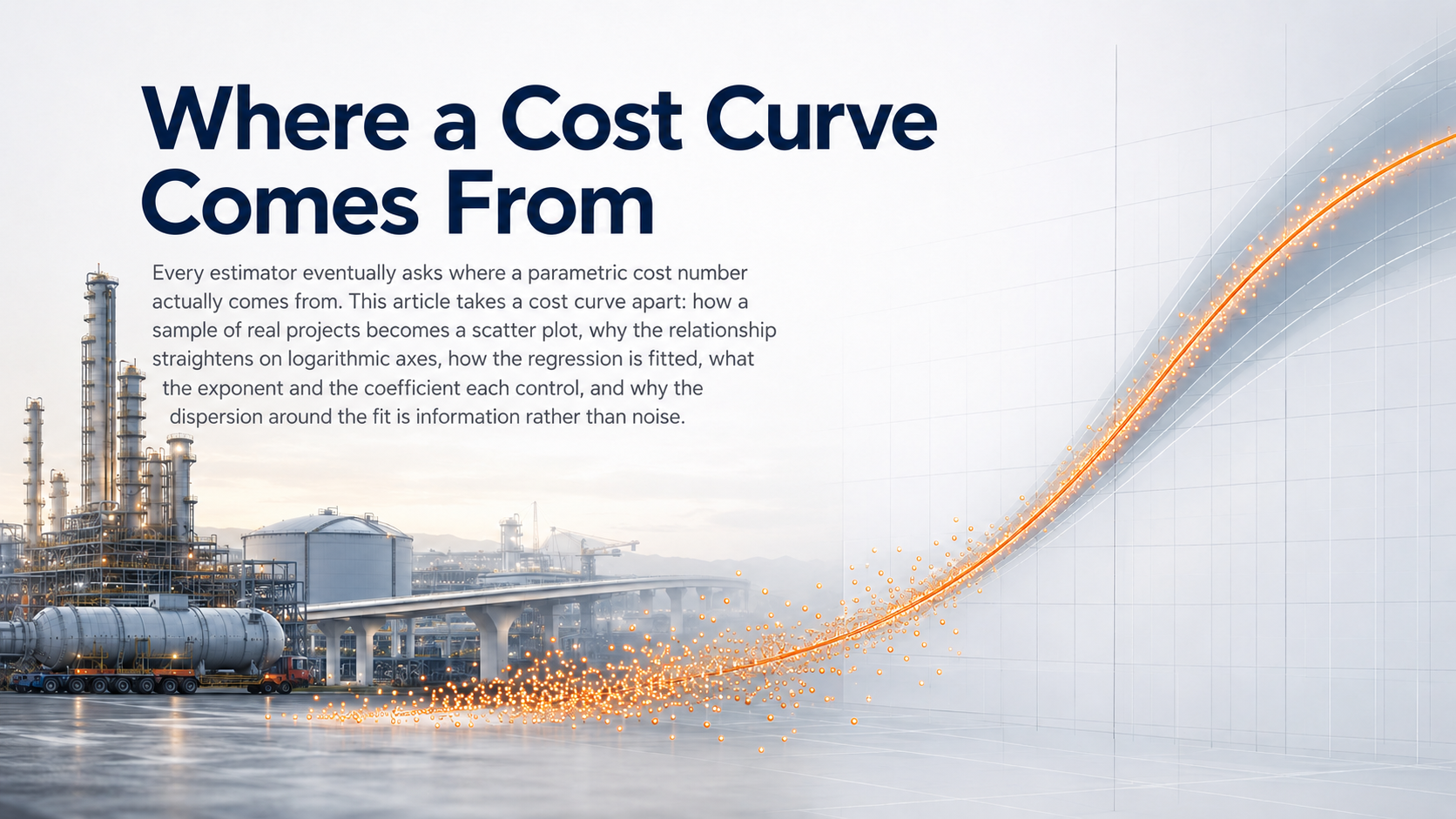
- Cost curves
- KPI ratios
- Benchmark datasets
- Estimate accuracy
5. Why This Matters: The End of Cost Blindness
The industry problem is well documented:
- ~80% of megaprojects exceed original estimates
- ~$1.7 trillion lost annually due to cost inefficiencies
KPEX Ecosystem Solves:
| Problem | Ecosystem Solution |
|---|---|
| Fragmented cost data | Unified WBS taxonomy |
| Static estimates | Dynamic, indexed models |
| Disconnected procurement | RFQ integration |
| Vendor opacity | Structured marketplace |
| Poor benchmarking | Live data feedback |
6. The Strategic Advantage: The Data Moat
The true value of the ecosystem is not the software.
It is the data structure and network effect.
Each interaction:
- Each RFQ
- Each vendor response
- Each estimate
This creates what can be defined as:
A Cost Intelligence Data Moat
As highlighted in your positioning:
“The data moat cannot be bought. It must be built.”
7. From Tools to Infrastructure
The evolution is clear:
| Stage | Nature | Limitation |
|---|---|---|
| 1G | Tool | Isolated |
| 2G | Platform | Domain-bound |
| Exchange | Ecosystem | Network-driven |
The CAPEX ecosystem is not just improving estimation.
It is redefining:
- How projects are evaluated
- How procurement is structured
- How capital decisions are made
Conclusion: A New Operating Model for Capital Projects
The transition from spreadsheets → platforms → ecosystems represents one of the most important structural shifts in cost engineering in decades.
Organizations that adopt this model will gain:
- Higher estimate accuracy
- Faster decision cycles
- Stronger procurement positioning
- Data-driven competitive advantage
Those that do not will remain constrained by:
- Fragmented data
- Reactive decision-making
- Systematic cost uncertainty