Data Analytics in Cost Engineering: From Spreadsheets to Intelligence Platforms
The shift from spreadsheet-based benchmarking to integrated data analytics platforms is transforming what is possible in cost engineering.

The Spreadsheet Era Is Ending
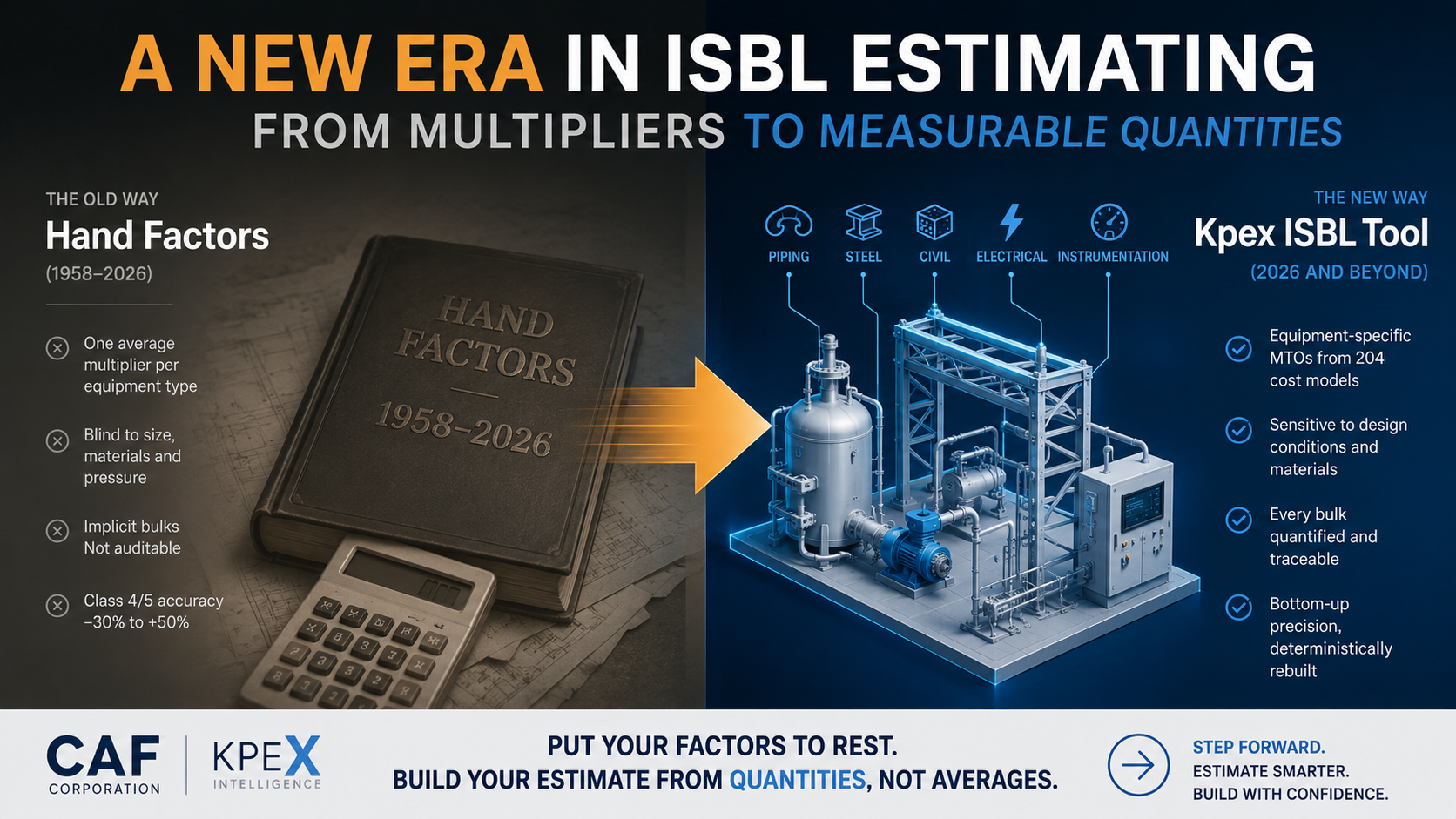
For decades, cost engineering benchmarking has been conducted in spreadsheets — manually assembled collections of project data, requiring hours of data preparation for each new analysis. The limitations are well understood: version control problems, data normalisation inconsistencies, inability to handle large datasets and no audit trail.
Integrated cost intelligence platforms represent a fundamental shift in how benchmarking is performed. Rather than assembling data for each analysis, the data exists in a structured, normalised database — available for query, comparison and export in seconds.
What Integrated Analytics Enables
- Multi-dimensional filtering — Isolate reference projects by geography, technology, scale, date of execution and execution strategy
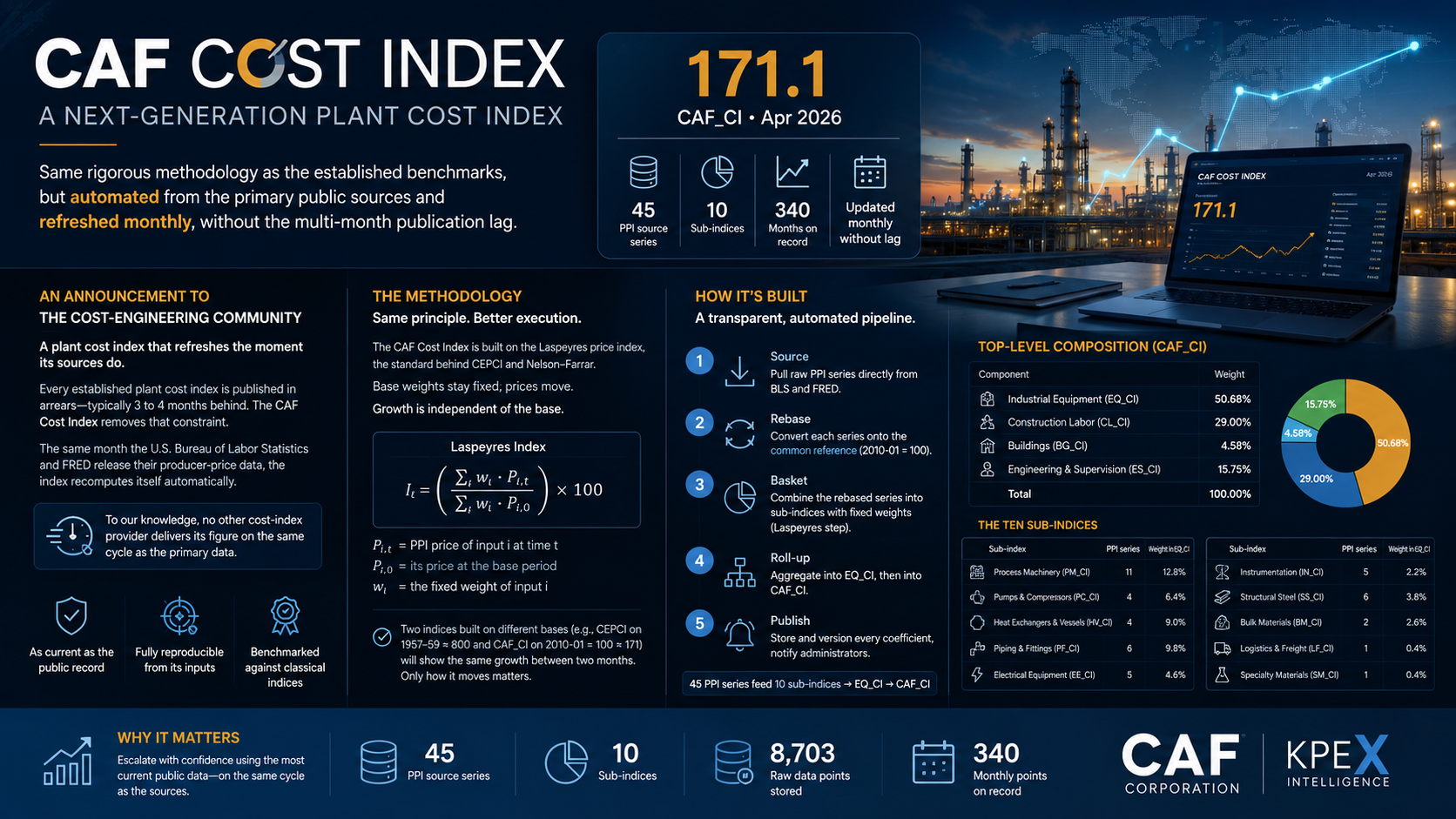
- Automatic normalisation — Apply location factors, escalation indices and currency conversions without manual calculation
- Confidence interval quantification — Understand the statistical spread of the reference dataset, not just the average
The Kpex Platform Approach
CAF Corporation Kpex platform is built on this integrated analytics model. All cost models, benchmarking data and support tools are accessed through a single web-based environment. Location adjustments (CAF LFI) and time escalation (CAF CAI) are applied automatically — eliminating the manual normalisation step that consumed so much time in the spreadsheet era.